

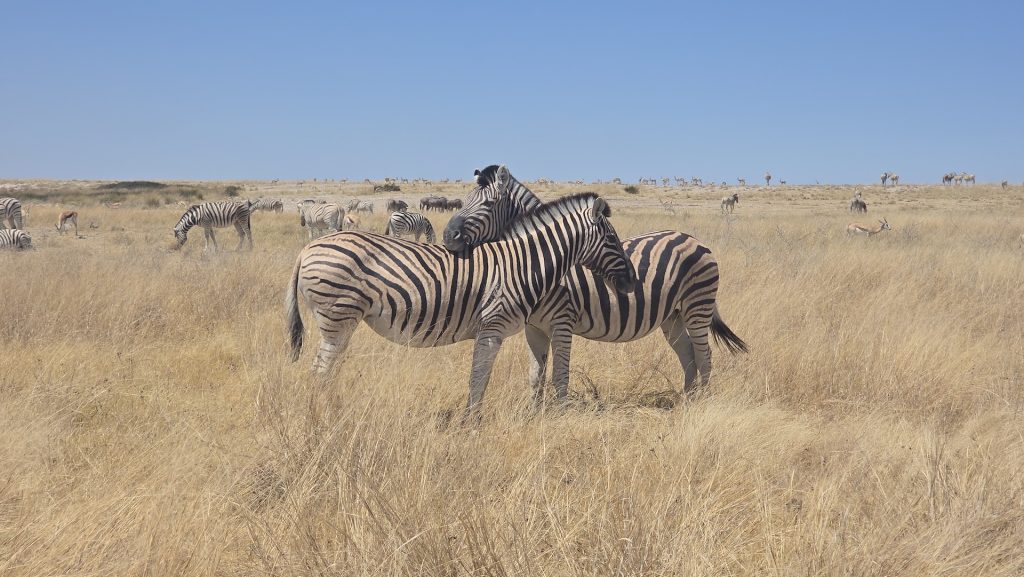
Namibia had been on our radar for a long time, but before bringing World Vegan Travel guests here, we wanted to experience the country for ourselves.
Could a destination known for vast distances, rugged gravel roads and remote safari lodges work well for luxury plant-based travelers? Would the food be satisfying? How challenging would a self-drive itinerary really be? And which lodges and reserves would be the best fit for future World Vegan Travel trips?
There was only one way to find out.
We rented a fully equipped four-wheel-drive vehicle and set off on an extensive scouting journey across Namibia. In this first part of our three-part Namibia series, we begin in Windhoek before heading north to Onguma and Etosha National Park.
Arriving in Namibia
Our journey began at Hosea Kutako International Airport, around 45 kilometres outside Windhoek.
After clearing immigration, one of our first priorities was getting connected. Reliable mobile coverage becomes increasingly important when travelling through remote parts of Namibia, particularly when you are relying on navigation and spending long stretches away from major towns.
Once that was sorted, we met our transfer driver and headed toward the capital.
Even on that first drive, Namibia’s layered history and culture were immediately visible. We spotted Herero women wearing their distinctive traditional dress, with voluminous Victorian-style gowns and striking horn-shaped headwear — clothing that today carries deep cultural significance and symbolism.
Getting to Know Our 4×4
Our first night was at the Hilton Windhoek, but before we could settle in, we had an important lesson ahead of us: learning how to operate the Toyota Hilux that would become our home on wheels for the next twelve days.
Driving through Namibia is not something to take lightly. Outside the main highways, travellers encounter long stretches of gravel roads, corrugations, sand and extremely remote terrain.
Our vehicle came equipped with expedition gear, a travel fridge and two spare wheels mounted beneath the chassis. We were shown how to lower and change the spare tyre, and our driver carefully marked reliable fuel stops on a paper road map.
It was the sort of practical preparation that makes you realise very quickly just how vast Namibia really is.
Exploring Windhoek
With our vehicle training complete, we headed out on foot to explore Windhoek.
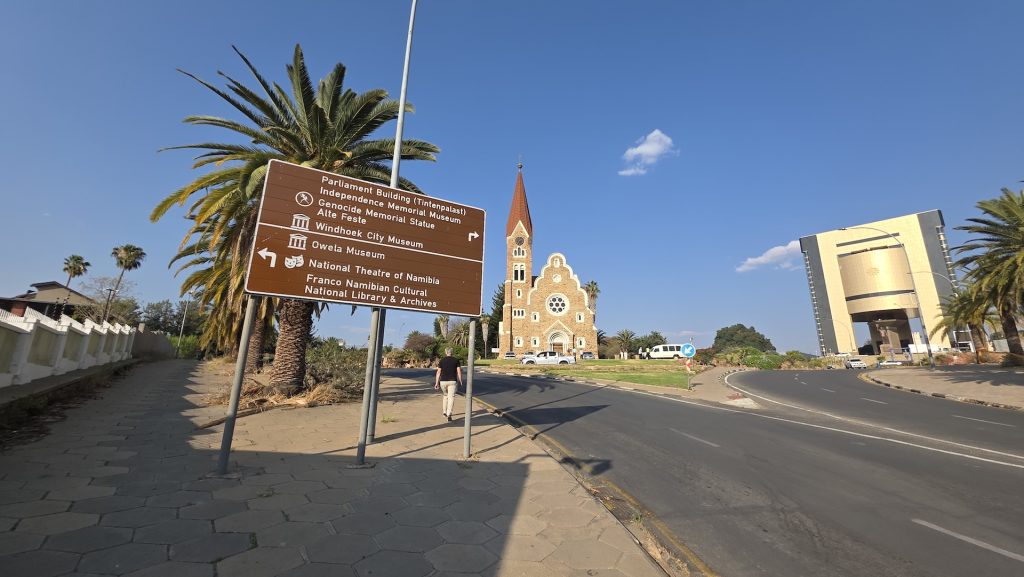
The city surprised us. It felt clean, relaxed and easy to navigate, with a fascinating mixture of modern African life and German colonial architecture.
We visited Christuskirche, the striking Lutheran church completed in 1910, and the nearby Independence Memorial Museum. The contrast between these two landmarks says a great deal about Namibia’s complex history.
At Post Street Mall, we came across fragments of the famous Gibeon meteorite shower displayed right in the pedestrian precinct.
Later, we finished the afternoon with sunset drinks overlooking the surrounding hills before heading to Olivia’s Kitchen in Klein Windhoek for dinner.
And importantly for us, there were good vegan options — including a hearty plant-based burger with avocado, mushrooms, vegan cheese and fries.

The Road North
The following morning, we stocked up on essentials at a supermarket before pointing the Hilux north.
Shelf-stable oat milk was high on the list. When you are heading deep into safari country, you do not want to discover that your morning coffee suddenly comes without plant milk!
Leaving Windhoek behind, the B1 stretched north through dry thornveld, cattle ranches and wide-open landscapes.
The further we travelled, the more the scale of Namibia became apparent. Long distances between settlements, sparse traffic and enormous open horizons are simply part of travelling here.

Onguma The Fort
Our next destination was Onguma Game Reserve, on the eastern edge of Etosha National Park.
After passing through the reserve gates, we arrived at Onguma The Fort.
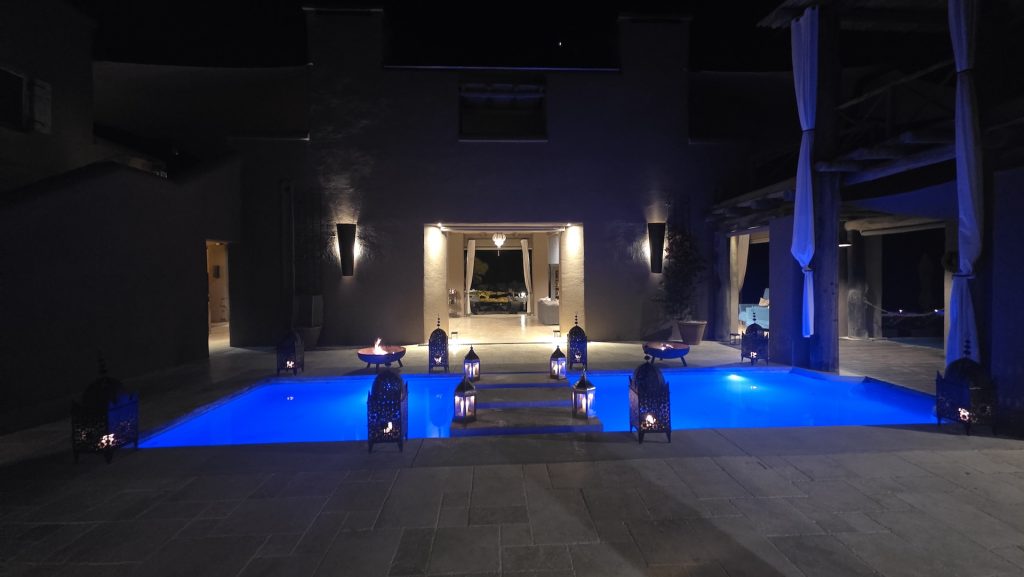
The lodge is dramatic and atmospheric, with Moroccan-inspired architecture, enormous timber doors and sweeping views across the plains.
Our private suite looked directly over the landscape and included an outdoor shower, viewing deck and even a wood-fired soaking tub.
It was exactly the kind of place we needed to experience firsthand when considering what might work for future World Vegan Travel guests.
Our First Namibia Safari
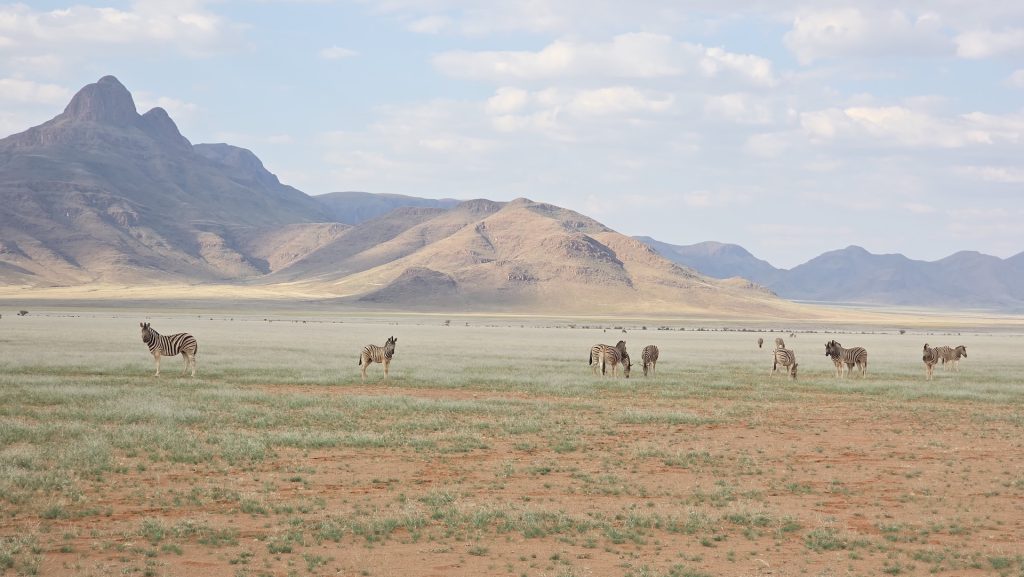
That afternoon, we joined our guide for our first game drive.
The outing was a gentle introduction to the reserve rather than a dramatic predator chase — and that is part of the reality of safari.
We spotted giraffes, warthogs, an elephant and an impressive variety of birdlife before stopping for a classic sundowner as the Namibian sky turned shades of gold and dusty pink.
Back at the lodge, however, we encountered one of the recurring themes of our scouting trip: plant-based food that was beautifully presented but not always substantial enough.
Vegetables are wonderful, but active travellers need satisfying sources of protein too — beans, lentils, chickpeas, tofu or tempeh rather than simply another roasted vegetable centrepiece.
These are exactly the sorts of conversations we have with hotel and lodge teams when assessing destinations for future trips.
Entering Etosha National Park
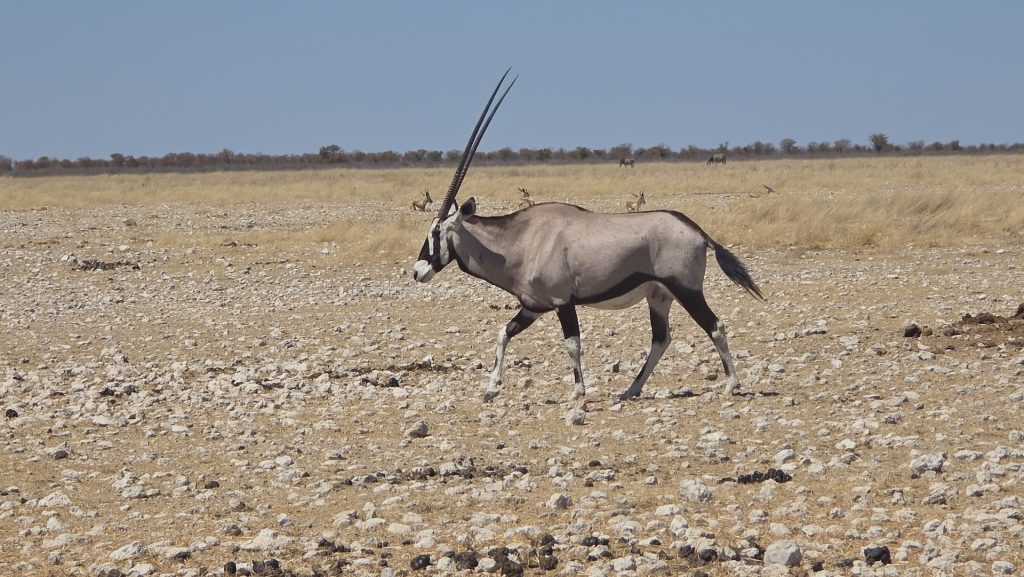
The next morning, we entered Etosha National Park for the first time.
Etosha translates to the “Great White Place”, and when you see the enormous pale salt pan stretching toward the horizon, the name makes perfect sense.
Almost immediately, we spotted a large male lion crossing the open plains while wildebeest, zebra and impala watched him carefully.
At a nearby waterhole, we watched a giraffe cautiously lower itself to drink — an awkward and vulnerable process that becomes fascinating when you have the time to simply sit and observe.
It was an extraordinary first morning in one of Africa’s most famous wildlife destinations.
Scouting Onguma
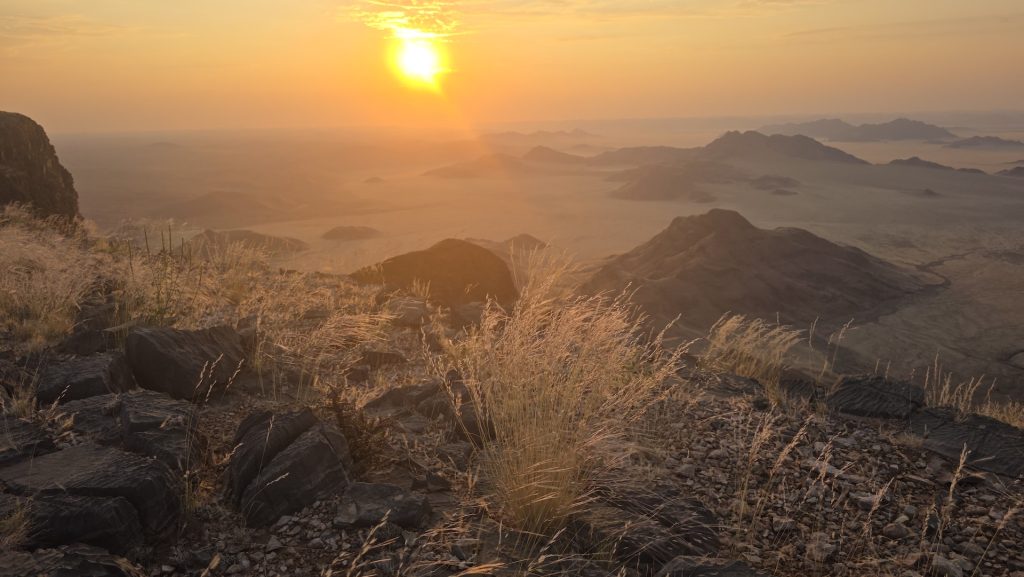
Back at Onguma, we switched from safari mode into scouting mode.
We inspected The Fort as well as Onguma Bush Camp and met with management to discuss plant-based catering in more detail.
The conversation was encouraging. The team was receptive to our feedback about creating vegan meals that are not only attractive but genuinely filling and nutritionally balanced.
We also visited the Onkolo Hide, a sunken photographic hide positioned at water level.
One of the standout experiences was using a professional directional microphone and headphones to listen to the sounds around the waterhole in remarkable detail — birds, water and movement in the bush suddenly amplified into an immersive soundscape.
Driving Across Etosha
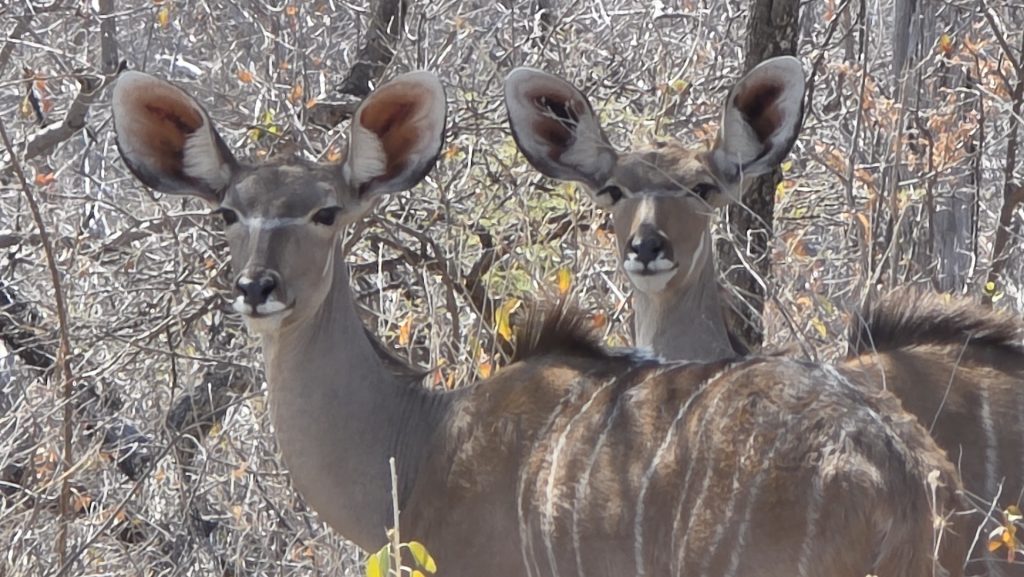
The next day brought one of the highlights of the trip: driving ourselves across Etosha National Park.
Our next stop was Ongava Game Reserve on the opposite side of the park, which meant we could either drive around Etosha — or straight through it.
Naturally, we chose straight through.
The journey took around five and a half hours, crossing dramatically changing landscapes from mopane woodland to the vast white salt pan and open limestone plains.
Self-driving adds an entirely different dimension to safari. Without a professional guide spotting wildlife for you, every sighting feels like a discovery.
And we had some remarkable ones.
At one point, two cheetahs walked along the roadside before crossing directly in front of our vehicle. Later, we spotted another lion resting in the shade and countless zebras scattered across the plains.
It was one of those drives where the journey itself became the destination.
Encounter by Ongava
After exiting Etosha through Andersson Gate, we continued to Encounter by Ongava.
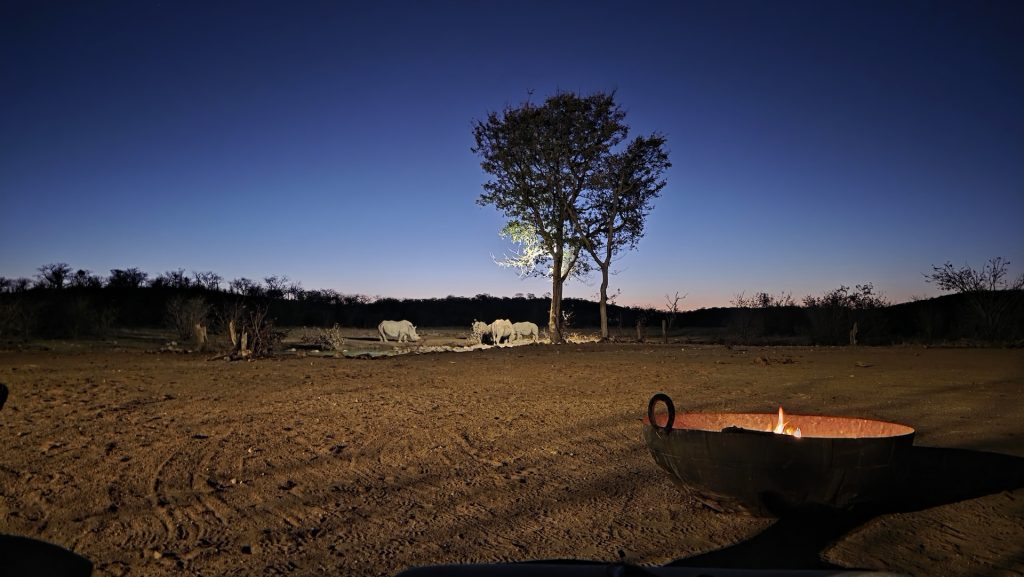
The renovated camp immediately impressed us, with its combination of stone, thatch, neutral interiors and luxury tented accommodation overlooking an active waterhole.
Our afternoon game drive produced yet another exceptional wildlife encounter: three adult male white rhinos following a female and her calf.
After sundowners, we returned to camp for dinner beneath the night sky — the perfect end to a very long but memorable day behind the wheel.
The End of Part 1
Before leaving Ongava, we inspected several of the reserve’s other properties, including Ongava Game Lodge and Andersons at Ongava.
Seeing these properties side by side gave us a much clearer understanding of which styles of accommodation might suit different travellers — from traditional safari luxury to intimate tented camps and conservation-focused lodges.
And with that, Part 1 of our Namibia road trip came to an end.
We had explored Windhoek, learned the realities of driving a fully equipped 4×4 across Namibia, tested the plant-based offering at remote safari lodges, encountered lions, cheetahs and rhinos, and driven right across the extraordinary white expanse of Etosha National Park.

Coming Up in Part 2
In Part 2, the landscape changes completely as we leave the open plains behind and head into rugged Damaraland.
We’ll be tracking desert-adapted elephants through dry riverbeds, exploring ancient rock engravings, sleeping beneath the Milky Way and experiencing one of the most dramatic temperature changes of the entire journey as we head toward Namibia’s Atlantic coast.
Listen to Namibia Road Trip Part 1: Windhoek & Etosha on the World Vegan Travel Podcast, and join us for Part 2 of the adventure.
Learn More About What is Discussed on the Podcast
- Etosha National Park – Namibia’s flagship national park, famous for its vast salt pan, waterholes and wildlife.
- Onguma Nature Reserve – Learn more about the private reserve on Etosha’s eastern boundary, including its lodges and proximity to the Von Lindequist Gate.
- Onguma Nature Reserve
- Ongava Game Reserve – Explore the private reserve bordering Etosha, including Encounter, Ongava Lodge and Anderssons, as well as its conservation and research work.
- Ongava Game Reserve
- Things to See in Windhoek – Information on landmarks mentioned in the episode, including Christuskirche and the Independence Memorial Museum.
- Visit Namibia – Things to Do in Windhoek
- Namibia’s National Parks – An overview of Namibia’s protected areas and national parks.
Other World Vegan Travel Content Connected With This Episode
- Namibia – There’s something for everyone! | Marike & Diaan Hoffman | Ep 109
- African Plant-Based Cuisine | Food, Culture & Tamu
- Elephant Conservation in South Africa | A Scientist’s Mission
- The First Plant-Forward Safari Lodge in Africa | Helene Sinisterra
- Exploring Vegan Hospitality in South Africa: An Interview with Marian from Old Joe’s Kaia
- The Timbavati, Game Reserve in South Africa – A Vegan Paradise | Hayley Cooper | Ep 114
- Five Best Places in South Africa to see The Big Five | Ingrid Geertsema | Ep 105
- S4 Ep2 Namibia – The Safari Destination You Need To Know About | JC De Klerk