
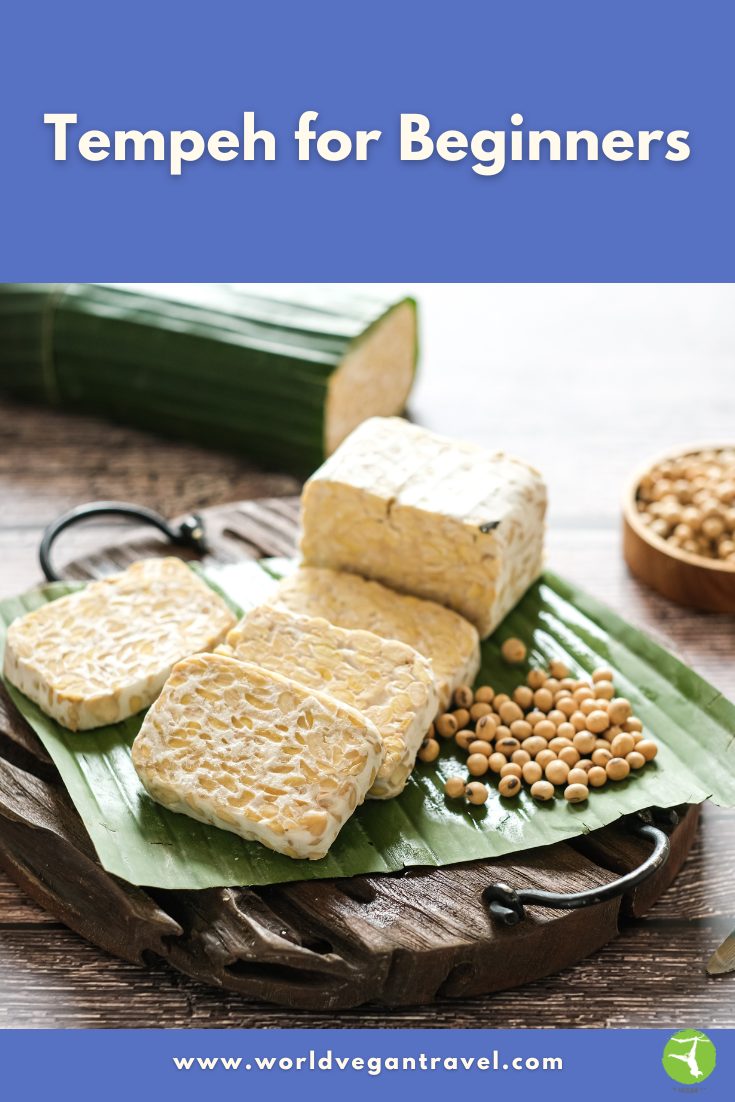
Welcome to Tempeh for Beginners! If you’ve ever walked past tempeh in the supermarket and wondered ‘What on earth do I do with that?‘, you’re in the right place. Tempeh looks a little unusual, but it’s actually one of the oldest, healthiest, and most delicious plant-based proteins in the world.
Today, we’ll take you on a friendly, simple journey—what tempeh is, how it tastes, how to use it, and why so many vegans, vegetarians, and food lovers adore it. Think of this as your gentle, easy guide to understanding tempeh… just like we did with seitan for beginners.
🌿 What Is Tempeh?
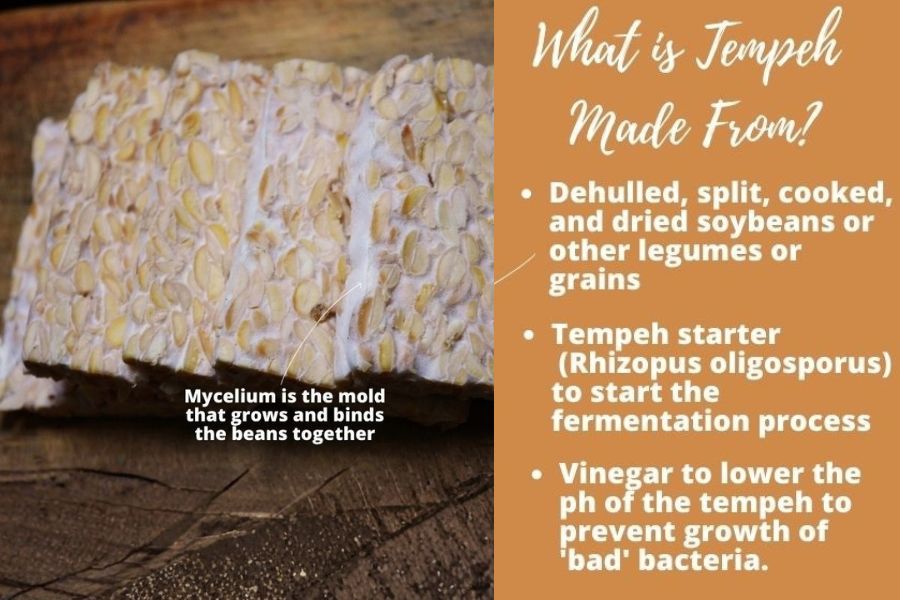
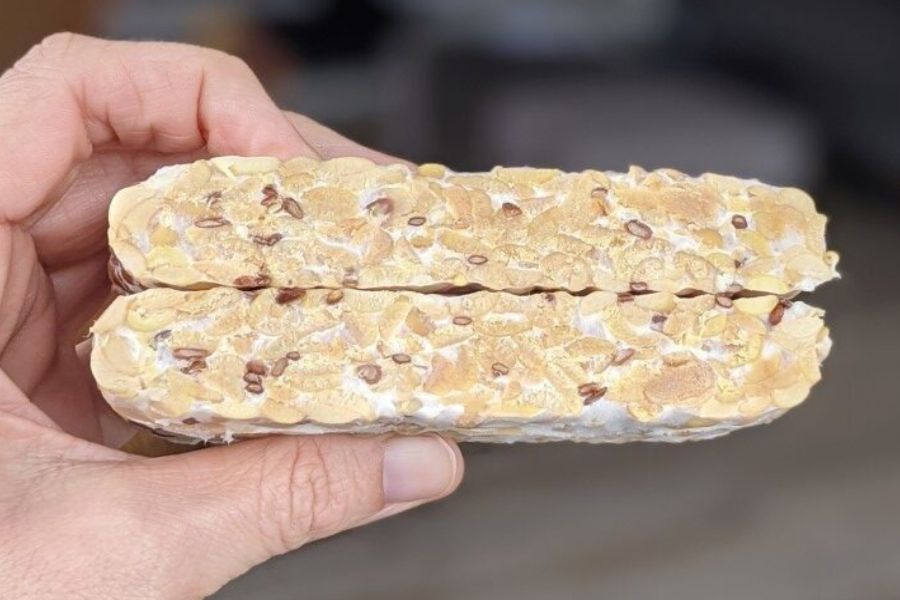
At its heart, tempeh is made from whole soybeans that have been cooked, fermented, and pressed into a firm cake. Because you can still see the beans, tempeh looks a bit different from tofu. You can slice it, cube it, crumble it, and cook it in almost any way you’d cook meat or tofu.
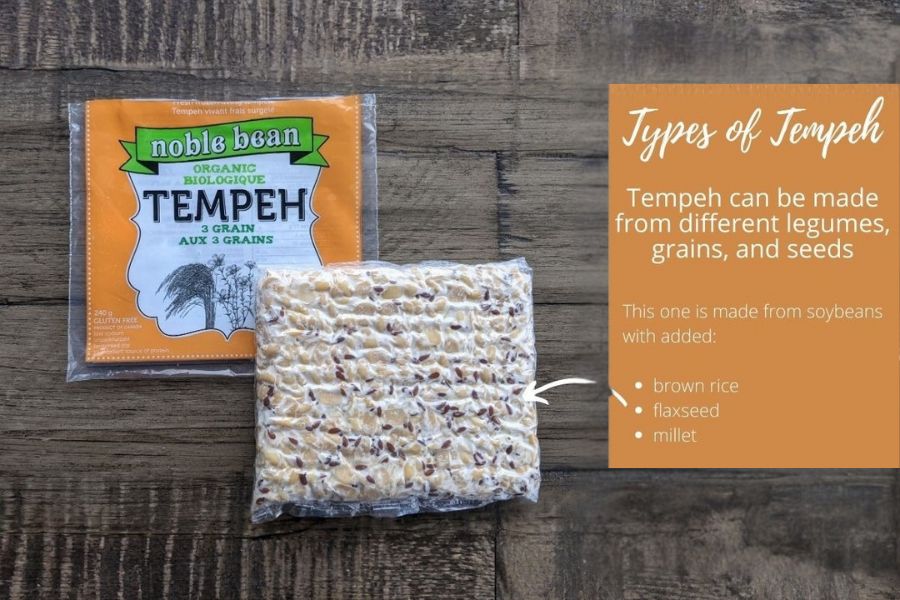
Most tempeh is made from soy, but it can also be made from black beans, chickpeas, lentils, or grains. If the package uses another bean, it will say so—like “chickpea tempeh.”
🌱 Is Tempeh Vegan?
Yes! Tempeh is 100% vegan.
It usually contains only three ingredients:
- Soybeans
- Vinegar
- A natural starter culture (like the ones used in bread or yogurt)
Even though the starter contains live microorganisms, they are vegan—just like yeast.
🍽️ What Does Tempeh Taste Like?
If tofu had a louder, nuttier, more confident sibling… that’s tempeh.
Tempeh tastes:
- Nutty
- Earthy
- Slightly savoury
- Firm and chewy
It has much more flavor than tofu because of the fermentation, which also makes it great at soaking up marinades. Many people describe it as “meaty,” but without trying to imitate meat.
🔥 Is Tempeh a Raw Food?
No. Tempeh isn’t raw because the soybeans are cooked before they’re fermented.
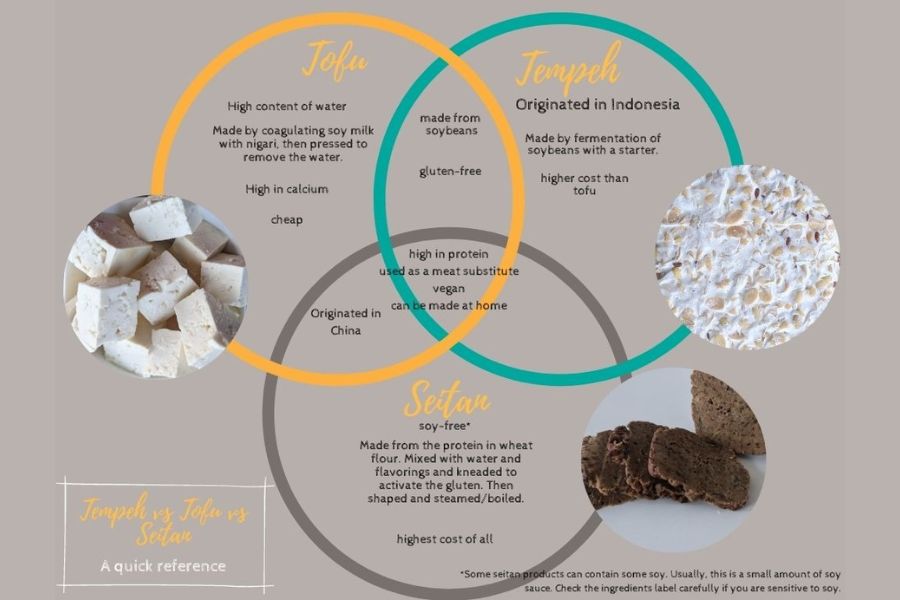
🥢 Tempeh vs. Tofu vs. Seitan
Here’s a simple breakdown:
Tempeh
- Made from whole fermented soybeans
- Nutty flavor, firm bite
- High in protein and fibre
- Minimally processed
Tofu
- Made by curdling soy milk
- Softer, milder flavour
- Less fibre, more water
Seitan
- Made from wheat protein (vital wheat gluten)
- Chewy, meaty texture
- Soy-free (unless flavored with soy sauce)
If you’re brand new to vegan proteins, tempeh is a great “next step” after tofu, but before diving into chewier options like seitan.
🥘 How Do You Cook Tempeh?
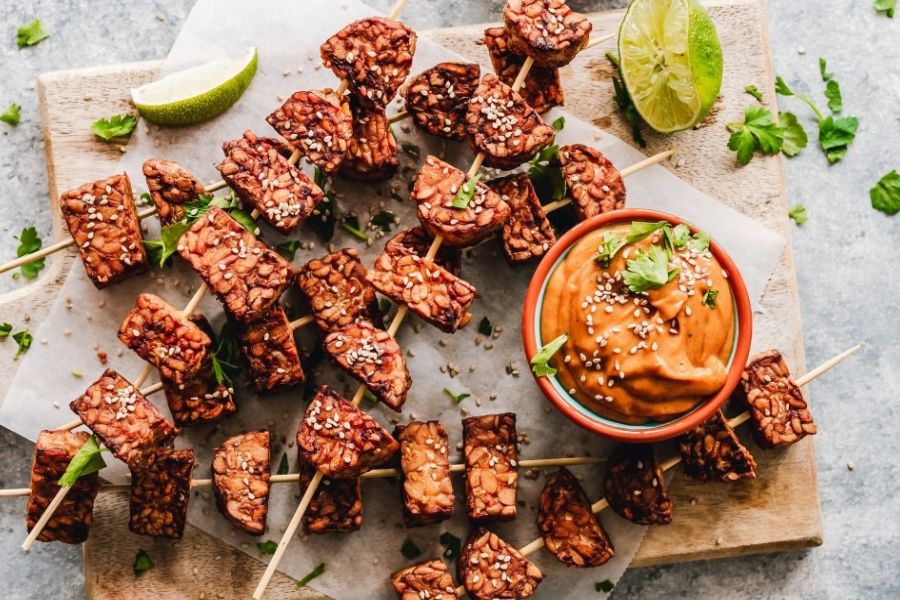
Tempeh is super versatile! You can:
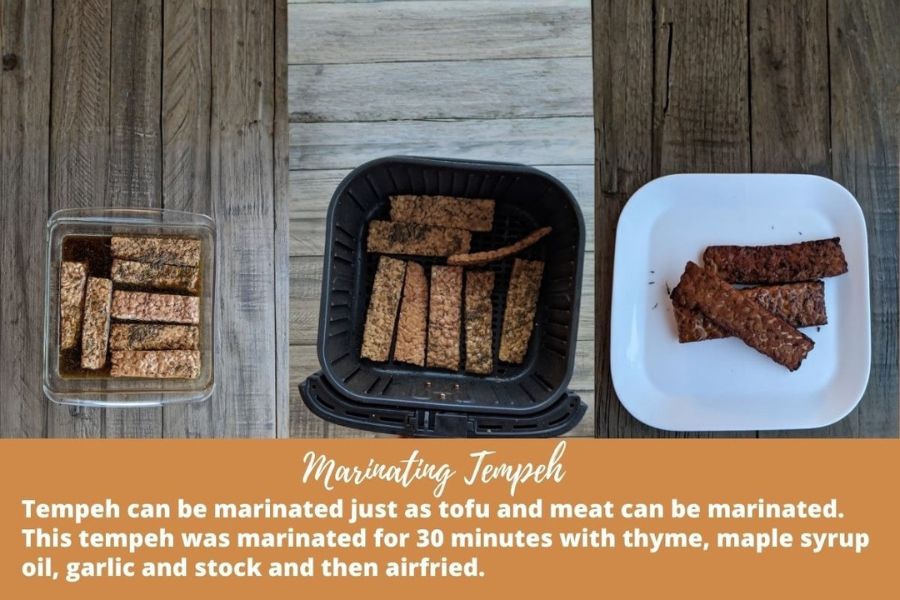
- Bake it
- Fry it
- Grill it
- Crumble it
- Add it to curries, salads, stir-fries, sandwiches, wraps, and bowls
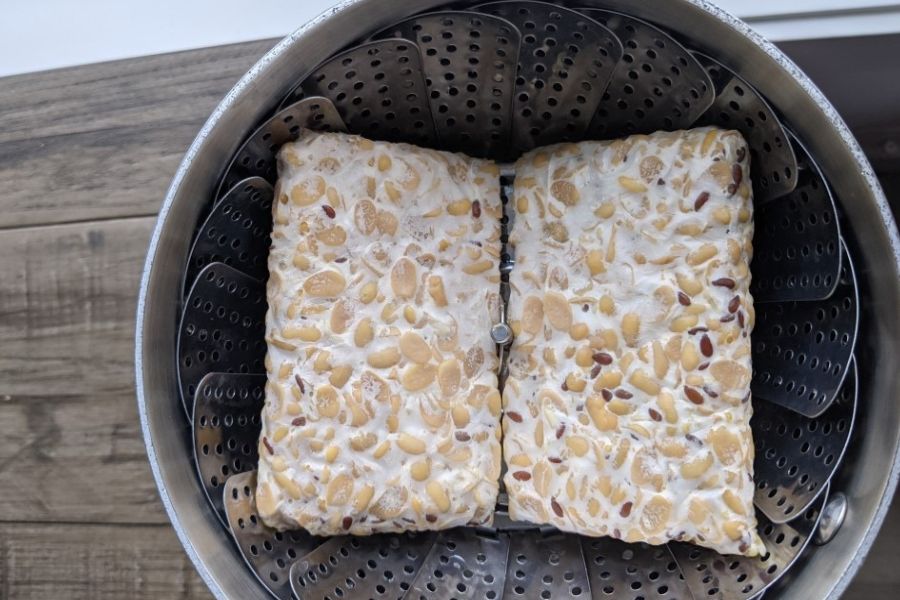
A popular tip: Steam tempeh for 10 minutes before marinating.
This softens it slightly and helps it absorb flavour even better.
🌍 Where Does Tempeh Come From?
Tempeh has been enjoyed for over 1,000 years in Indonesia, especially on the island of Java. It is still sold fresh in local markets, often wrapped in banana leaves instead of plastic.
Originally considered affordable “peasant food,” tempeh is now loved around the world for its nutrition, flavour, and sustainability.
🛒 Where to Buy Tempeh
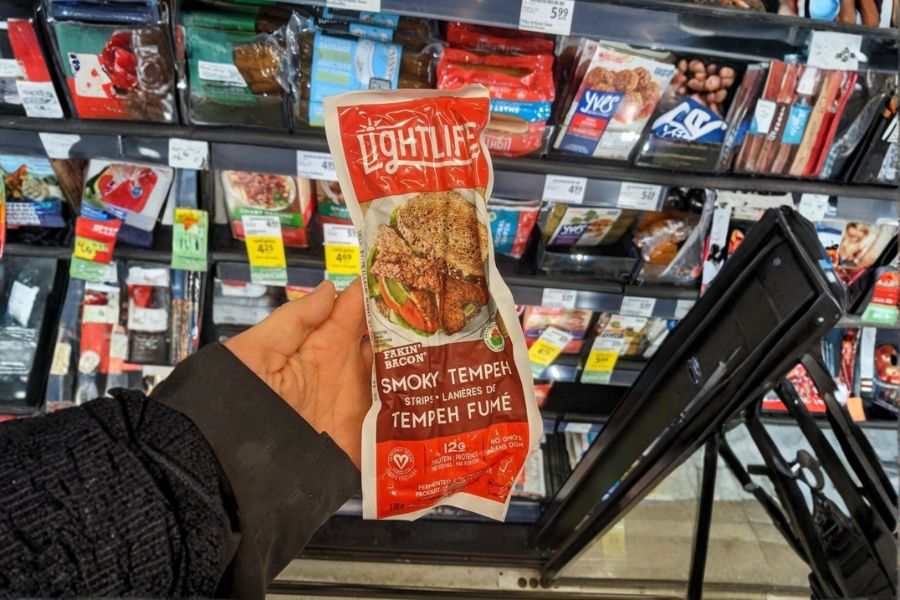
You’ll usually find tempeh in the:
- Refrigerated section (near tofu and vegan meats)
- Frozen section (if turnover is low)
- Health food stores
- Online shops
- Local producers (many small businesses make handmade tempeh)
Some brands also sell marinated or pre-cooked tempeh, perfect for quick meals.

💪 Is Tempeh Healthy?
Yes! Tempeh is considered a nutrient-dense food. It’s:
- High in protein
- High in fibre
- Rich in prebiotics
- Low in carbohydrates
- Packed with vitamins and minerals
Nutrition per 100g:
- 193 calories
- 19g protein
- 11g fat
- 7.6g carbohydrates
- 9g fibre
Tempeh keeps you fuller for longer and supports gut health thanks to natural fermentation.
🌾 Is Tempeh Gluten-Free?
Yes—as long as it’s made from soybeans only.
If the tempeh includes grains like barley or wheat, it will not be gluten-free.
🌱 Is Tempeh Soy-Free?
Most tempeh contains soy, but you can find soy-free versions made from:
- Chickpeas
- Black beans
- Lentils
Always check the label.
🔬 Is Tempeh Highly Processed?
Not at all. Tempeh is considered minimally processed, especially compared to isolated soy proteins found in some vegan meats.
🌡️ How Is Tempeh Made? (Simple Explanation)
- Soybeans are soaked overnight.
- They’re then dehulled, split, boiled, and dried.
- A starter culture and vinegar are added.
- The mixture is placed in a breathable container (often a perforated bag).
- Fermentation begins at warm temperatures.
- After 24–48 hours, the beans bind together into a firm cake.
You can make tempeh at home—many people do!
❄️ Storing & Freezing Tempeh
- Fresh tempeh lasts 5–7 days in the fridge.
- You can freeze tempeh for up to 12 months.
- Thaw on the counter or steam to soften.
🧐 How Do I Know if Tempeh Has Gone Bad?
Normal:
✔️ White mycelium
✔️ Small dark spots
Bad:
❌ Yellow or strong ammonia smell
❌ Slimy texture
❌ Mushy or collapsing structure
💰 How Much Does Tempeh Cost?
Typically around $3.50 for 250g, slightly more expensive than tofu, likely because it contains less water and takes longer to make.
📚 Learn More About Tempeh
If tempeh is starting to spark your curiosity, there are wonderful books and guides dedicated to fermentation, Indonesian cooking, and vegan protein.
Join our World Vegan Travel newsletter for simple tips, fun recipes, and beginner-friendly guides like this one. It’s free!
💬 Let’s Discuss!
Do you love tempeh?
Have questions?
Want tips, favourite brands, or recipe ideas?
Tell us in the comments below — we love hearing from our community.